A tale of AI rejection, DIY recording, and audiobook ambitions on a budget
In 2025, audiobooks are no longer a nice-to-have. They’re an essential part of any publishing strategy, even for indie authors like me working with tighter budgets. Audiobooks remain the fastest-growing sector in the publishing industry. No surprise there. People are busier, attention spans are shorter, and there’s a real need to make content as accessible and consumable as possible.
As for me, I’ve become a converted audiobook listener. Paperbacks and eBooks are great if you have leisure time. I always smile at the people who tell me, “I love the feel of a physical book in my hands.” I get it. I do. But for many of us who don’t have time to sit down and read, audiobooks are the perfect solution. They let you “read” while cooking, cleaning, walking the dog, or driving.
That ambition led me down some costly paths, like purchasing a course from the Mikkelsen twins — a choice I regret as much as buying the Contena course, but I’m not here to dwell on all the money I’ve spent on stupid shit.
Costs and challenges of professional narration
You’d think it’d be as simple as hiring a voice actor or narrator, right? Well, technically, yes, but there’s more to it. Financial constraints make this challenging. Hiring a professional narrator is expensive, especially since my novels often exceed 100,000 words, translating to over ten hours of audio. With narration costs starting at $250 USD per hour, and considering my modest sales figures, professional narration is still well beyond my budget.
I fully acknowledge the value of professional narrators. A great audiobook is like a movie, only better, with each word bringing the story to life. An hour of narration involves so much more than just an hour of actual work.
That realization hit home when I attempted to record and edit my own audiobook. After investing in a microphone and software, I thought I could break the recording into serialized, podcast-like segments.
However, this adventure quickly revealed some hard truths: I didn’t quite like the sound of my own voice, doubted my editing skills, and struggled to maintain consistent accents for different characters. The experience was a real eye-opener about the intricacies of audiobook production. So there’s no doubting the actual value of professional narration, I’m simply pointing out that it’s currently out of my price range.
For my writer friends in the US, options like ACX (Amazon’s Audiobook Creation Exchange) offer a more affordable path, often with up-and-coming narrators. Findaway Voices also offers competitive prices, but I wasn’t convinced this option was right for me. This dilemma led me to understand why many Aussie indie authors choose not to set their books in Australia.

The Aussie accent is one more barrier
Achieving a genuine Australian accent is difficult for non-native speakers. Attempts often result in a Cockney or British-sounding accent, which, while fine in their own right, are not Australian. To Australians, the difference is clear. Don’t believe me, just look through the reviews of audiobooks with narrators who perform the Aussie accent poorly. These reviews are an immediate red flag to potential Australian readers who might have otherwise purchased your book if not for the reviews.
Being an independent author without the backing of a big publishing company means you’re on your own in finding a suitable narrator. I explored platforms like Fiverr, Upwork, and Freelancer, but couldn’t find the narrators I needed at a price I could afford.
Hiring Australian voice actors from an agency was prohibitively expensive, often requiring significantly higher outlay than their overseas counterparts.
Exploring AI narration alternatives
I then explored several AI narration services, like Murf AI, which offers AI voices for various projects. Unfortunately, after signing up for their trial, I discovered my steamy content violated their terms of use.
So, with the rise of AI and the growing use of AI auto-narration, Google Books stepped in with an offering. While not a perfect solution, it’s a solid plan B. Google Play’s auto-narration provides benefits like dual and duet narration, and lets you fine-tune pronunciation across different accents and languages. Impressively, their Australian accent is decent, which is rare among affordable options.
The main drawback with Google’s service is the time it takes for long novels. The process of listening and tweaking the audio is lengthy, and without support, it’s easy to overlook errors. Self-editing can be risky as you might hear what you expect rather than what is actually said.
Competing with Google, Apple has entered the auto-narrated books scene. They’ve made it incredibly easy to sign up for their service through platforms like Draft2Digital. I used Apple’s service for my book ‘Don’t Fall For Me.’ Apple managed all the production, testing, and quality control, which was a huge relief. It was as simple as pressing a button and waiting for it to be market-ready.
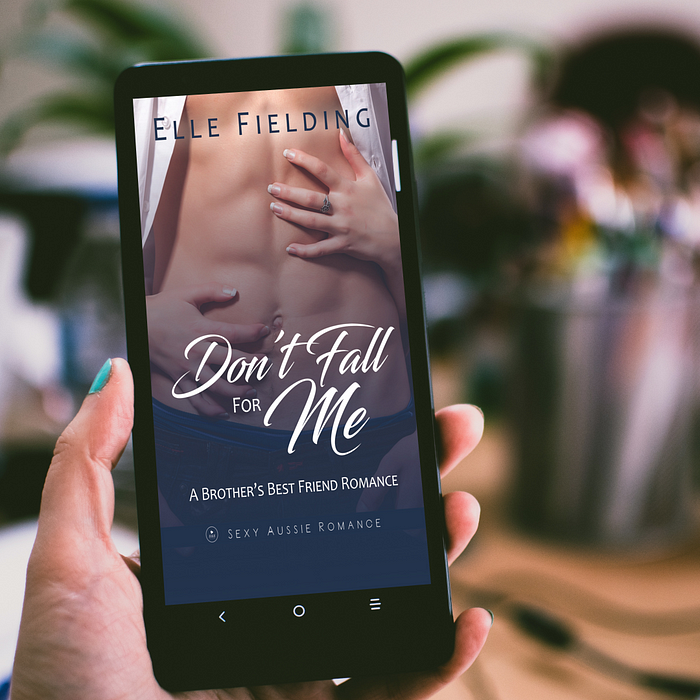
I was quite impressed with Apple’s final product. For a book from a single POV set in the US, it’s an excellent alternative for authors entering the audiobook market — it’s a really smooth listen. However, as a romance author who often uses dual POVs, I was limited to choosing either a male or female narrator, not both. And disappointingly, there were no Aussie narrators available.
These limitations have led me to make some compromises. In many cases, I’ve started ditching the Aussie accent altogether when using AI narration — not because I want to, but because it gives me more voice options and avoids the mispronunciations that can pull readers out of the story. Ironically, I’ve found that AI-generated US voices often sound more natural and consistent reading an Australian book than some real US narrators attempting the accent. It’s not ideal, but it’s the kind of trade-off you get used to when you’re publishing on a tight budget.
Apple and Google offer good, solid plan Bs. And now, in 2025, Amazon has started rolling out its own AI narration. I’ve tested it. It’s okay. It doesn’t offer quite as much creative freedom as Google’s version, but it’s another option on the table.
More recently, I’ve been experimenting with ElevenLabs. Their voices sound a little more natural, and unlike some other tools, they’re actually accepted by platforms like Spotify, which opens up new distribution channels for indie authors like me. Their system also doesn’t freak out over smut, which, as a romance author, is a huge bonus.
It’s not perfect — no AI is — but it’s a solid alternative if you want more control without hiring a full production team.
Choosing between what’s right and what’s possible
Using AI narration puts me squarely in the middle of the battle between tech and art. Making my books more accessible to time-poor readers feels like a must, but I use these tools knowing there are risks. Some listeners will see the “AI-narrated” label and instantly skip. Others in the artist community see any use of AI as a betrayal.
AI’s growing presence in creative work is a touchy topic, and for good reason. Its impact on artists and voice actors can’t be ignored. If I could afford to hire real narrators for every book, I would. But like a lot of indie authors, I’m stuck between doing what’s best for the art and doing what’s possible for the budget.
At the end of the day, I want my books to reach more readers, and sometimes that means choosing imperfect tools over silence. But the fact that AI narration is becoming more available doesn’t mean it’s universally accepted, especially in the romance writing community.
Adapting my writing strategy
Audiobooks are essential for modern readers, but as an Australian author, my production options are limited. This has significantly influenced my writing and publishing decisions in the last couple of years. To afford a professional audiobook one day, I’ve had to adjust my strategy.
Now, I focus on shorter fiction pieces, aiming for 30,000–60,000 words, which are more budget-friendly. I typically stick to a single point of view to avoid needing multiple narrators. I also carefully choose my settings; often opting for Australia, but with the full awareness that a poorly executed accent might turn off readers and be costly with larger agencies.
I’m still dreaming of the day I can afford to use a full Australian voice cast and bring my stories to life the way they deserve, or at least afford duet narration. Until then, it’s AI, workarounds, and a hell of a lot of learning on the job. Which is kind of the indie author way.
 Elle Fielding